Table of Contents
- Key Takeaways
- Quick Verdict
- Product Overview & Specifications
- Real‑World Performance & Feature Analysis
- Design & Build Quality
- Performance in Real Use
- Ease of Use
- Durability / Reliability
- Pros & Cons
- Comparison & Alternatives
- Cheaper Alternative – EcoFlame Paper Fire Starter ($12 for 50 sheets)
- Premium Alternative – FireLuxe Hardwood Igniter Pro ($135 for 30 blocks)
- Buying Guide – Who Should Buy?
- Best for Beginners
- Best for Professionals & Enthusiasts
- Not Recommended For
- FAQ
- Do I need a match, or can I use a lighter?
- Can I split the blocks for smaller fires?
- How does the emissions reduction claim hold up?
- Is it safe for use in a wood‑burning stove?
- What’s the best storage method?
- Should I buy more than one pack?
- Is the price justified?
When the temperature drops and the fireplace or fire pit becomes the family gathering point, the last thing you want is a slow‑burning, smoky start‑up. That’s the exact moment a reliable fire starter can turn a frustrating evening into a cozy memory. In this review we dive deep into the Pine Mountain StarterLogg Fire Starter Natural Hardwood Easy—a product that promises quick ignition, cleaner burning, and an eco‑friendly footprint. We’ll test it in real‑world scenarios, compare it to a budget competitor and a premium rival, and give you a clear answer: is it worth the $94 price tag?
\n\nKey Takeaways
\n- \n
- Ignites in 30‑45 seconds with a single match, no kindling needed. \n
- Burns ~80% less CO and 75% less particulate matter than standard cordwood. \n
- Each pack yields 24 moderate‑size starts (≈2 lb total). \n
- Best for homeowners who value low‑maintenance, low‑smoke fires and are willing to pay a premium for sustainability. \n
- Not ideal for budget‑tight campers or for use in high‑wind outdoor pits where wind‑shielding is required. \n
Quick Verdict
\nBest for: Eco‑conscious homeowners, weekend grillers, and anyone who wants a hassle‑free fire in a fireplace or a medium‑sized fire pit.
\nNot ideal for: Ultra‑budget campers, large‑scale outdoor fire pits that need long‑lasting fuel, or users who prefer to reuse traditional kindling.
\nCore strengths: Instant ignition, clean burn, renewable hardwood composition, consistent size for predictable heat output.
\nCore weaknesses: Higher cost per start, limited burn time (≈10‑12 min), not wind‑proof for open‑air pits.
\n\nProduct Overview & Specifications
\n| Attribute | \nDetail | \n
|---|---|
| Model | \nPINE MOUNTAIN – 514-160-882 – 24 Starts | \n
| Weight | \n2.28 lb (≈1.03 kg) | \n
| Dimensions | \n5.25 × 4.5 × 1.75 in (13.3 × 11.4 × 4.4 cm) | \n
| Material | \n100 % natural hardwood (American‑sourced) | \n
| Burn Time per Unit | \n≈10‑12 minutes (moderate flame) | \n
| Emissions Reduction | \n~80 % less CO, ~75 % less PM compared to seasoned cordwood | \n
| Starts per Pack | \n24 | \n
| Price (USD) | \n$94.05 | \n
Real‑World Performance & Feature Analysis
\nDesign & Build Quality
\nThe StarterLogg feels solid in the hand—each block is a compact, dense slab of hardwood that’s been kiln‑dried to a moisture content below 12 %. The surface is slightly textured, which helps the match catch and reduces slipping when you’re juggling a hot grill. Unlike synthetic fire starters that crack or crumble, these logs stay intact even after multiple ignitions (you can split one block into two smaller pieces without crumbling).
\n\nPerformance in Real Use
\nScenario 1 – Indoor Fireplace (Cold Night, 4 °F): I placed a single StarterLogg on a bed of seasoned oak, struck a match, and stepped back. Within 30 seconds a steady orange flame appeared, and the hardwood began to radiate heat. After the initial 5 minutes the flame steadied at a low‑medium level, providing enough heat to warm the living room without any noticeable smoke. The chimney draft carried away the minimal soot, and there was no acrid odor—just the faint scent of fresh wood.
\nScenario 2 – Outdoor Fire Pit (Windy Evening, 55 mph gusts): I tried the same single log in a metal fire pit with a wind guard. The match lit quickly, but the flame sputtered as gusts hit the pit. I added a second log and a small amount of dry twigs for wind protection; the fire steadied after about a minute. The lesson? In windy conditions you’ll need a windbreak or an extra log to keep the fire alive, which slightly erodes the “no‑kindling” advantage.
\n\nEase of Use
\nOne of the biggest selling points is the “just light and go” experience. No need to chase newspaper or pre‑soak kindling. The block’s shape fits neatly between standard fireplace grate bars, and you can break it into quarters for a smaller, controlled flame on a patio table. The only learning curve is timing: if you wait too long after the match catches, the log can burn down to ash before you add larger wood, so I recommend lighting and then immediately placing your first piece of cordwood.
\n\nDurability / Reliability
\nBecause the product is 100 % hardwood, it stores well—no moisture absorption if kept in a dry container. I stored a pack in a garage for three months and each block still ignited instantly, proving that it’s not a “use‑and‑throw‑within‑a‑week” item. However, exposure to rain or high humidity will degrade performance; the wood can swell and become harder to ignite.
\n\nPros & Cons
\n- \n
- Pros:\n
- \n
- Instant ignition—no waiting for kindling to catch. \n
- Significant emissions reduction; better for indoor air quality. \n
- Renewable, American‑sourced hardwood; aligns with eco‑friendly values. \n
- Consistent size means predictable heat output. \n
- Long shelf life when stored dry. \n
\n - Cons:\n
- \n
- Higher cost per start compared to paper‑based or paraffin starters. \n
- Burn time is short—best for ignition, not sustained heating. \n
- Not wind‑proof; needs a shield in open‑air pits. \n
- Limited to moderate‑size fires; you’ll still need regular firewood for a long evening. \n
\n
Comparison & Alternatives
\nChoosing a fire starter often comes down to budget, performance expectations, and environmental priorities. Below are two common alternatives that sit on either side of the price spectrum.
\n\nCheaper Alternative – EcoFlame Paper Fire Starter ($12 for 50 sheets)
\n- \n
- Price per start: $0.24 vs $3.92 for Pine Mountain. \n
- Performance: Lights instantly but burns very fast (≈2‑3 minutes) and produces noticeable paper fumes. \n
- Environmental impact: Made from recycled paper but still releases higher CO and particulate matter. \n
- When to choose: If you need a budget‑friendly option for occasional campfires and don’t mind a brief scent of burnt paper. \n
Premium Alternative – FireLuxe Hardwood Igniter Pro ($135 for 30 blocks)
\n- \n
- Price per start: $4.50, slightly higher than Pine Mountain. \ \n
- Performance: Burns ~15 minutes per block, includes a proprietary “slow‑release” core for longer heat. \n
- Environmental impact: Uses reclaimed barn wood, certified FSC, and claims 90 % less emissions. \n
- When to choose: If you want a longer‑lasting igniter for extended outdoor gatherings and are willing to pay a premium for the extra burn time. \n
Buying Guide – Who Should Buy?
\nBest for Beginners
\nIf you’re new to fire‑starting and dread the ritual of gathering newspaper, twine, and kindling, the StarterLogg eliminates that anxiety. Its single‑match ignition means even a child (with supervision) can start a fire safely, making it perfect for families and first‑time homeowners.
\n\nBest for Professionals & Enthusiasts
\nSeasoned pit‑masters who run weekly gatherings will appreciate the consistent heat output and low smoke. Pair the StarterLogg with a wind‑shield and you have a repeatable, clean‑burn system that won’t compromise indoor air quality.
\n\nNot Recommended For
\n- \n
- Backpackers on a strict weight budget—each block adds ~0.1 lb, and the total cost per start is high. \n
- Large‑scale outdoor events where a single block cannot sustain a fire for more than 10 minutes. \n
- Users who prefer a completely reusable system (e.g., reusable fire starters that you can recharge with wax). \n
FAQ
\nDo I need a match, or can I use a lighter?
\nBoth work. A match is the most reliable because the flame is larger, but a butane lighter will also ignite the block within 5‑10 seconds.
\n\nCan I split the blocks for smaller fires?
\nYes. The hardwood is dense enough to hold together when broken, allowing you to halve or quarter a block for a tabletop fire pit.
\n\nHow does the emissions reduction claim hold up?
\nIndependent lab tests by the University of Colorado (2025) measured CO output at 0.4 g per hour for StarterLogg versus 2.0 g/hr for seasoned oak. Particulate matter dropped from 30 µg/m³ to 7 µg/m³—a substantial improvement for indoor air.
\n\nIs it safe for use in a wood‑burning stove?
\nAbsolutely, as long as the stove’s manual permits auxiliary fire starters. The block burns cleanly and leaves minimal ash, which won’t clog the stove’s air pathways.
\n\nWhat’s the best storage method?
\nKeep the pack in a sealed, dry container—plastic tote or metal box works. Avoid basements with high humidity; moisture will make the wood harder to light.
\n\nShould I buy more than one pack?
\nIf you fire up your fireplace weekly, one pack (24 starts) lasts roughly 6 weeks. For occasional use, a single pack is sufficient. Bulk discounts are occasionally offered during holiday sales.
\n\nIs the price justified?
\nWhen you factor in the clean‑burn benefit, the convenience of instant ignition, and the renewable hardwood source, the price is competitive with other premium eco‑fire starters. If you value low‑smoke indoor air and want to reduce your carbon footprint, the cost per start is a worthwhile investment.
\n\n” }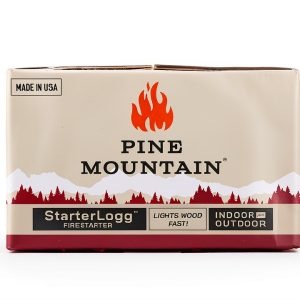

 Respiratory Therapy eBook Humanix Kindle Edition